
My fiction, “Professor Fader is Like a Virgin,” has been published by Sonora Review as part of their “short short short stories (under 100 words)” series.
Thanks, Joel Smith.
My fiction, “Professor Fader is Like a Virgin,” has been published by Sonora Review as part of their “short short short stories (under 100 words)” series.
Thanks, Joel Smith.
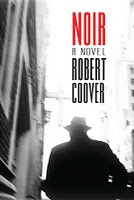 My review of Robert Coover’s Noir is in the May, 2010 issue of the Brooklyn Rail. Here’s an excerpt:
Rendered in a tone full of deadpan humor and crepuscular musings, Noir has a lot to admire: a walking punching bag who, though seemingly down for the count, manages to beat the countdown time and again; brilliantly drawn sequences like the grisly “Case of the Severed Hand” (perhaps Coover’s offhand tribute to the phantom hand in Rilke’s The Notebooks of Malte Laurids Brigge, or simply a nod to the legendary Arthur Howard fraud case); a masterful juggling of jokes, violence, and mystery; weird Lynchian punctures of the veil between dreams and waking life, where, echoing Noir, I can’t always “be sure what was real and what wasn’t, though in a sense it was all real, because even if I was only imagining it, it was still real, at least in my own mind, the only one I’ve got”; and, as expected of Coover—one of a dying breed of virtuosic stylists—a knowing revivifying of genre tropes.
Thanks, John Reed and Meghan Roe.
 My story, “How to Avoid Being a Woodpusher,” was selected as a finalist in The Rumpus’s The Jump Off, a contest where entrants “were asked to submit a fictional work of 300 words or less using as a jump-off point one sentence or sentence fragment from Sam Lipsyte’s novel The Ask.” I’m happy to be in the company of such fine writers as Mark Edmund Doten, Lincoln Michel, Maureen Miller, Shya Scanlon, Franklin Winslow, A. Wolfe, and Snowden Wright. Here’s an excerpt from my story:
As you mull over maneuvers, ignore the news of a subway platform birth. Don’t allow the translucent-slimed, meconium-stained bundle of filth spoil your positional plans. Disregard the radio’s panting in counterpoint with the television. Give up sussing out the song’s name: “For What It’s Worth,” and curb the laughter provoked by its announcement.
And be sure to check out the website of André da Loba, the artist whose illustrations grace the stories (the one above presides over mine). Loba merges a personalized cubism with a deranged whimsicality all his own. Someone should tell Michel Gondry about him.
Thanks, Rozalia Jovanovic!
 The mighty Brooklyn Rail has just published my review of Shane Jones’s The Failure Six. Here’s an excerpt:
A Jesse Ball magic mystery tour in a land of Calvino’s fables? With zany temporal shifts and winsome absurdities, Light Boxes, Shane Jones’s refractive first book, dispatches readers on just such a journey. Lyrical flights and evocative metaphors render the prose in poetic terms. In The Failure Six, Jones methodically dispenses with storytelling, surrendering the text to one strange and beautiful image after another:
The teahouse was tall and narrow, consisting of nineteen floors. The furniture was all wood, made by a carpenter who was a well-known acquaintance of the owner. Each floor had different-colored wallpaper and on each wall hung large paintings of country barns. All the wooden beams in the teahouse were covered in odd patches of red fur.
Thanks, John Reed.

 JOHN MADERA—Writer, Editor, Publisher